
This analysis from Center for Energy & Environmental Analysis examines the potential impact of federal permitting reform on the US energy mix and climate goals. Two key findings:
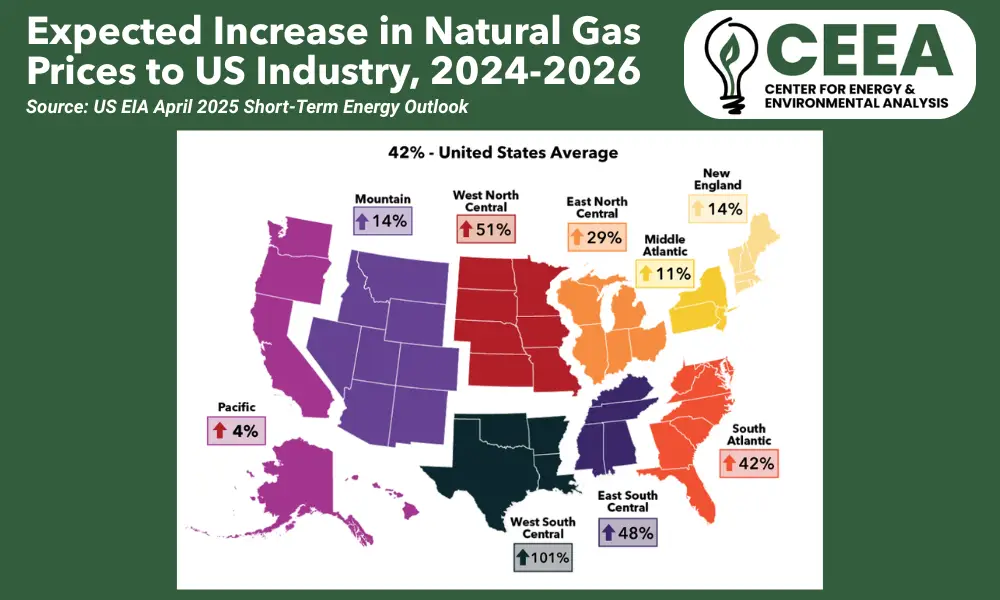
(1) As a result of the 2024 elections and the surge in AI-driven demand for new gas-fired electric power, the script has flipped on a potential permitting reform deal, and natural gas is now poised to be the biggest winner rather than solar, wind, and batteries.
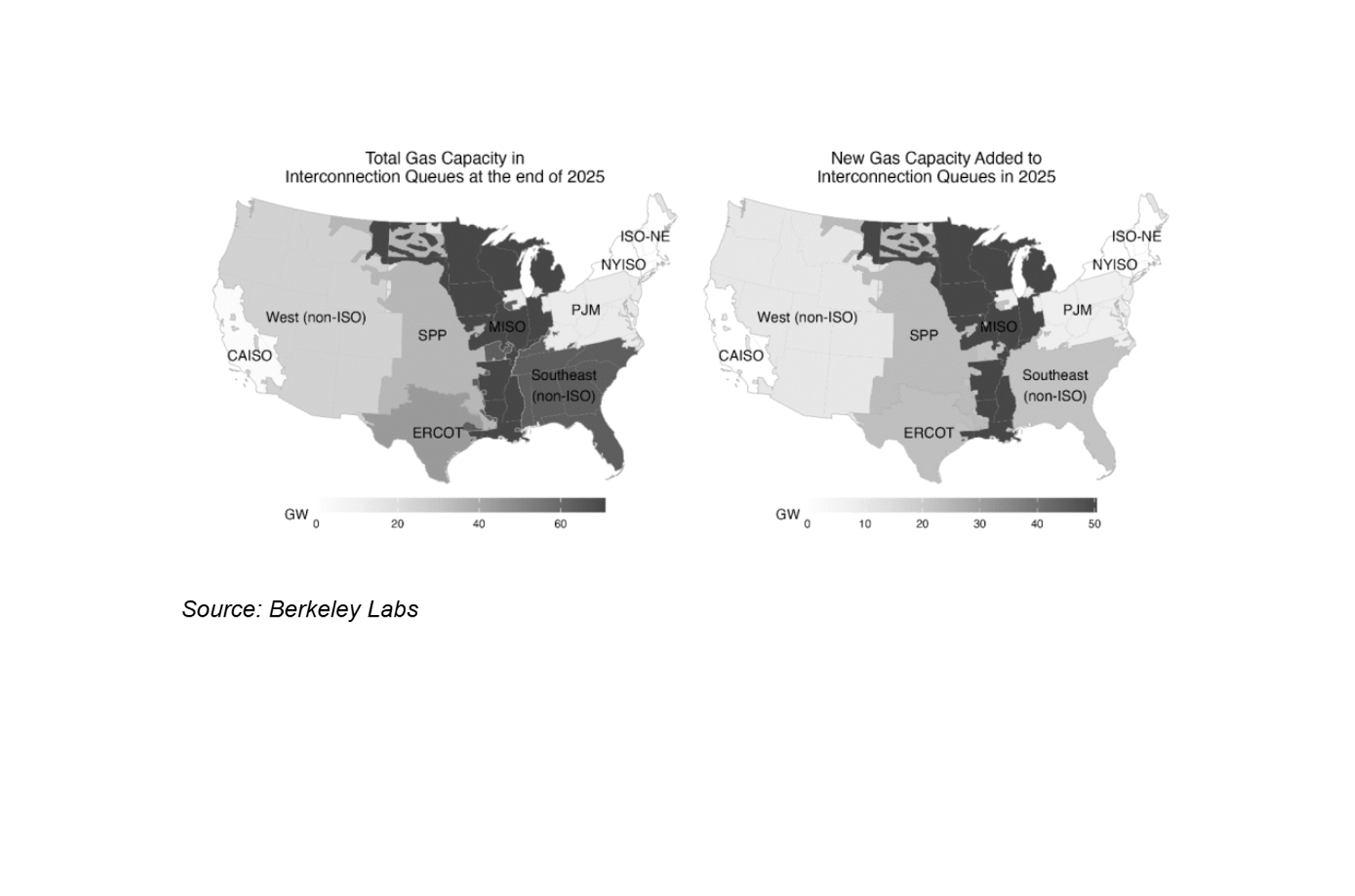
From 2024 to 2025, the amount of gas in the interconnection queue nearly doubled (even as the renewable energy queue fell significantly), and the amount of pending gas now exceeds the total amount of wind power in the queue.
The surging amount of gas has upended the likely impact of permitting reform. When permitting reform first gained prominence among clean energy proponents, President Biden was president, the IRA was in place, the surging demand of gas power for AI was not fully understood, and natural gas capacity in the queue was low. The world today is completely different. Demand for new gas is surging and the Trump administration will use every tool at its disposal – including any new permitting reform authorities – to speed gas while waging war on wind, solar and batteries.
Consequently, the script has flipped since 2024. The gas industry is poised to be the biggest winner of permitting reform. Among all the provisions being considered for permitting reform, the most consequential would benefit gas by giving the president unconstrained powers to categorically exclude major power projects and pipelines from NEPA without court review. Not coincidentally, the gas lobby is a leading proponent of getting permitting reform across the finish line in 2026.
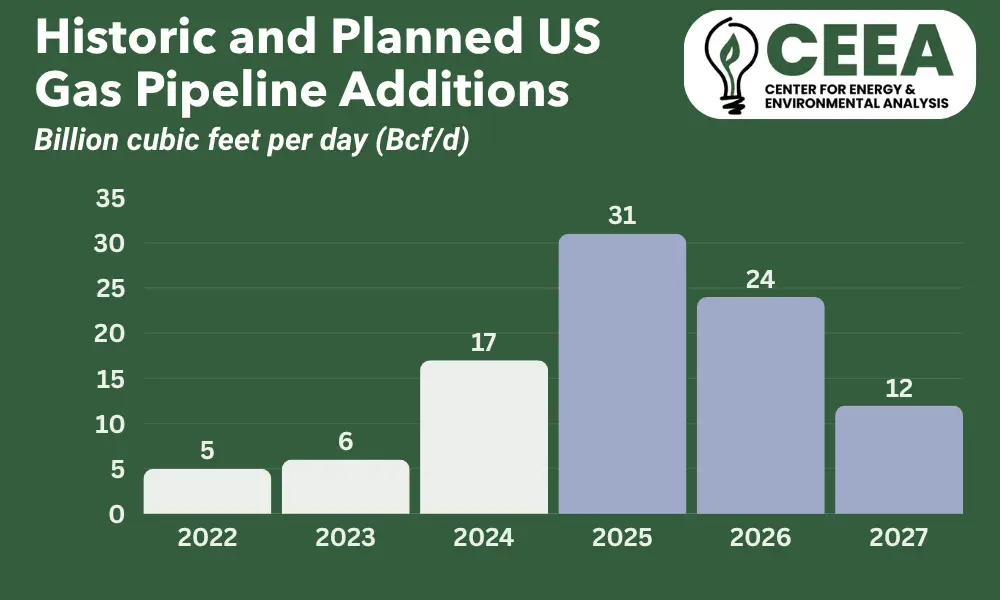
While much of the “permitting permanence” discussion has focused on Trump’s war on clean energy, proposed fixes would encourage a wave of new investment in gas power and pipeline construction — backed by guaranteed long term purchasing contracts and regulatory approvals — that will lock in a new wave of expanded US fossil fuel consumption for the next 20 years.
(2) Congressional permitting reform proposals currently under consideration will have uncertain and likely marginal impacts on the scale and pace of renewable energy and transmission.
The potential impact of permitting reform proposals on speeding renewable energy projects is highly speculative. NEPA – a top target of permitting reform proposals – has little bearing on the interconnection queue backlog. According to multiple recent studies of renewable energy permitting, the evidence shows that NEPA affects only a small share of renewable energy projects, and projects with an EIS are, on average, completed at the same pace or faster than those that do not require an EIS. According to a 2025 study by Resources for the Future, the total amount of solar and wind projects delayed by NEPA from 2009 through 2023 through court challenges amounted to less than 4 GW, which is less than 1% of the current backlog.
Transmission proposals aimed at speeding regional interconnection to the grid are welcome, but also speculative and unquantified, especially when considering that implementation will depend on how the Trump administration responds.